TRON bandwidth explained, and how it differs from energy
Fees & energyBandwidth pays for a transaction's size, with 600 free a day per address. A USDT transfer uses ~345 bandwidth and 64,285 energy (Nov 2026).
On this page 8 sections
Short answer
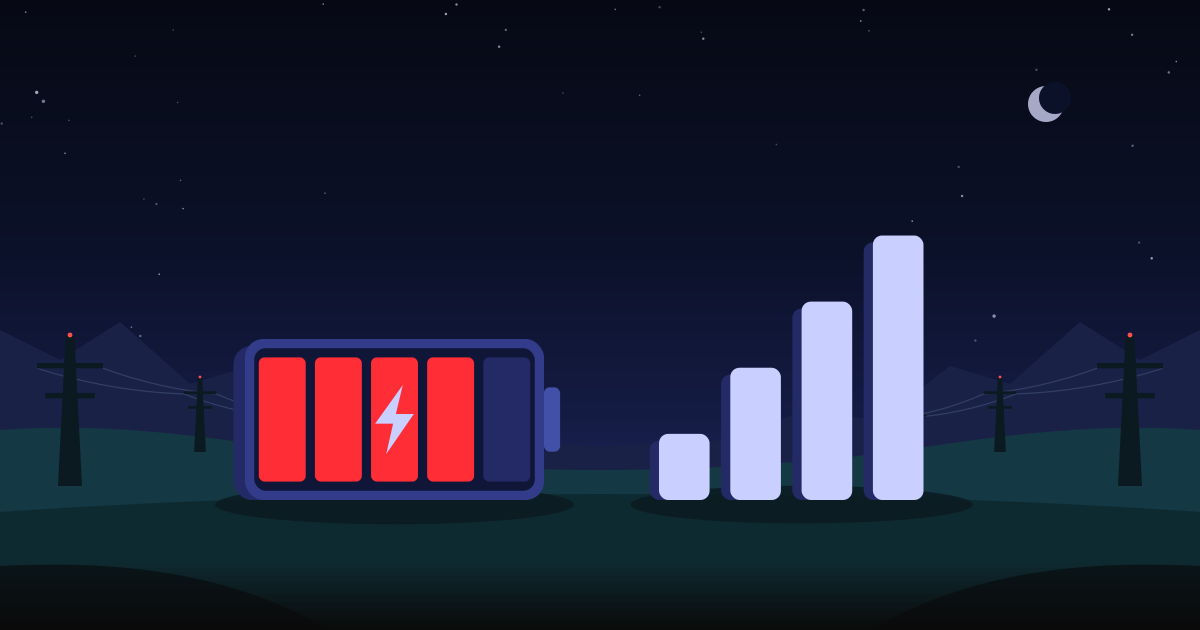
TRON charges for transactions in two resources instead of one gas fee. Bandwidth pays for a transaction's size in bytes, and every activated address gets 600 free a day; energy pays for running smart contracts such as USDT, and nobody gets it free. As of November 2026 a USDT transfer uses about 345 bandwidth and 64,285 energy, and if you lack either, the network burns your TRX to cover it.
Key takeaways
- USDT transfer: 64,285 energy (130,285 to an address with no USDT) and ~345 bandwidth, Nov 2026.
- Free allowance: 600 bandwidth a day per activated address, no free energy.
- Burn prices: 100 sun per energy and 1,000 sun per bandwidth, so energy is ~95% of the cost.
- Get energy by burning TRX, staking TRX (Stake 2.0) or receiving a delegation, which is how rental works.
If you have ever wondered why TRON asks for “energy” when you only wanted to send some USDT, this is the explainer. It covers what each resource pays for, how much a USDT transfer uses, and the three ways to get energy without burning TRX.
For a one-page summary with live numbers, see what is TRON energy.
Why does TRON have two resources instead of gas?
On Ethereum you pay one fee, gas, priced by an auction. TRON splits the cost into two resources and lets you get them in advance, by staking TRX or receiving them from someone else (TRON resource model docs).
The idea: people who prepare pay nothing per transaction, and people who don’t pay a fixed burn price. There is no bidding and no surge pricing on the burn.
What is TRON bandwidth?
What it pays for: the bytes your transaction takes up on the chain. Every transaction uses bandwidth, including plain TRX transfers.
How much a USDT transfer uses: about 345 bytes, so about 345 bandwidth.
Free allowance: each activated address gets 600 free bandwidth a day, refilling gradually over 24 hours. That covers one USDT transfer a day, or two TRX transfers. A new address that has not been activated has no free bandwidth (Tronscan support).
If you run out: the network burns TRX at 1,000 sun (0.001 TRX) per byte, about 0.35 TRX for a USDT transfer. The free allowance isn’t used partially: if you have 200 left and need 345, the whole 345 is paid in TRX. With no free bandwidth and no TRX to burn, the transfer fails with BANDWITH_ERROR.
What is TRON energy?
What it pays for: the computation a smart contract does. TRX transfers use none. USDT, USDC, swaps and other contract calls do.
How much a USDT transfer uses (November 2026, measured by StablecoinInsider on 13 Nov 2026):
- 64,285 energy if the receiver already holds USDT.
- 130,285 energy if the receiver has never held USDT or holds exactly zero, because the contract writes a new storage slot. More in why sending to a new address costs double.
Free allowance: none.
If you run out: the network burns TRX at 100 sun (0.0001 TRX) per energy, a price in force since 29 August 2025 (Tronscan proposals). So 64,285 energy costs 6.43 TRX. The full breakdown is in why USDT TRC-20 fees are so high.
Energy vs bandwidth: what’s the difference?
| Bandwidth | Energy | |
|---|---|---|
| Pays for | Transaction size (bytes) | Smart-contract computation |
| Used by TRX transfers | Yes (~270) | No |
| Used by USDT transfers | Yes (~345) | Yes (64,285 or 130,285) |
| Free daily allowance | 600 per activated address | None |
| Burn price if you lack it | 1,000 sun per unit | 100 sun per unit |
| Burn cost for one USDT transfer | ~0.35 TRX | 6.43 or 13.03 TRX |
| Refills | Over 24 hours | Over 24 hours |
Figures as of November 2026.
Energy is about 95% of the cost of a USDT transfer. That is why everything about cheaper transfers on TRON is really about energy.
How do you get TRON energy?
- Burn TRX. Not really “getting” it: the network charges you per transfer. This is the default.
- Stake TRX. Lock TRX with Stake 2.0 and receive energy daily in proportion to your share of everything staked. In November 2026 that was about 9.64 energy per TRX per day, so one daily USDT transfer needs about 6,666 TRX locked. See staking TRX for energy.
- Receive a delegation. Anyone who has staked TRX can delegate its energy to another address. Rental services like FeeBolt work this way: staked energy is delegated to your address for an hour or longer, and you pay a fraction of the burn price. See how to rent TRON energy and today’s rental prices.
How does energy refill?
Energy from staking, or delegated to you for a day or more, refills linearly over 24 hours after you use it. Spend 64,285 energy at noon and you have about half back by midnight and all of it by noon the next day.
That is why a 1-day rental covers about two transfers: one now, and one after the energy refills. Hour-long rentals end before the energy comes back.
What happens if a transfer runs out of energy?
If your address has some energy but not enough, and not enough TRX to burn for the rest, the contract stops with OUT_OF_ENERGY. The USDT stays put, but the energy spent on the attempt is gone. The usual cause is renting 64,285 energy for an empty receiver that needs 130,285. How to fix OUT_OF_ENERGY explains how to read the failure and retry safely.
How do I see my energy and bandwidth?
- In your wallet: TronLink shows Energy and Bandwidth on the account or resources screen. Other wallets often show them under the TRX asset or in a Resources section.
- On Tronscan: search your address. The account page shows available energy and bandwidth. How to check a USDT transaction on Tronscan shows where to find energy used per transaction.
- On FeeBolt: paste the address into the address checker. It shows energy, bandwidth, activation and whether the address holds USDT.
Every term used here, from sun to fee_limit, is in the TRON glossary.
Questions
Is TRON energy a token I can hold or sell?
No. Energy is an account resource, not a token. It can't be transferred like a coin, only delegated from staked TRX by its owner.
Why does my wallet say "insufficient energy" when I have TRX?
Some wallets warn you when the transfer will burn TRX. If you have enough TRX, the network burns it and the transfer goes through. If you don't, it fails. Renting energy before sending removes the warning and the burn.
Does energy expire?
Staked energy doesn't expire; it refills as long as your TRX stays staked. Rented energy ends when the rental period ends and the provider reclaims the delegation.
Can I use rented energy for things other than USDT?
Yes. Energy pays for any contract call: other TRC-20 tokens, swaps, NFT transfers. The amount needed depends on the contract.
How much bandwidth does a TRX transfer need?
About 270, so 600 free daily bandwidth covers two TRX transfers. Sending TRX to an address that has never been activated also costs a 1 TRX account-creation fee. See how to activate a TRON address.
What is sun?
The smallest unit of TRX: 1 TRX = 1,000,000 sun. Energy prices are quoted in sun per unit.
Sources
- TRON developer docs: Resource modeldevelopers.tron.network
- Tronscan support: Why is my bandwidth zero after creating a new address?support.tronscan.org
- StablecoinInsider: Cheapest way to send USDT on TRON (energy measurements)stablecoininsider.org · 13 Nov 2026
- Tronscan: network proposals (energy price)tronscan.org